


For the discerning UK online slot player, a game’s speed is as crucial as its payout potential. At Brick House Bonanza Slot, we’ve moved beyond superficial reviews to carry out a detailed, data-driven analysis of its operational metrics. This article presents an comprehensive examination of loading speeds, animation fluidity, and platform stability across the most typical devices and network conditions in the United Kingdom. We understand that a lag during a bonus round or a stutter on spin initiation can spoil the immersive experience and, more critically, affect gameplay strategy. Therefore, we have exposed this title to a battery of controlled tests, measuring everything from initial page load times to the performance of its Return to Player (RTP) algorithm in real-time conditions. Our findings provide a transparent, technical deep-dive, offering UK players a clear expectation of the flawless, high-performance experience they are entitled to, ensuring their gaming sessions are defined by excitement, not by annoying technical hiccups or unforeseen delays that can spoil the entire experience.
Our Testing Methodology: Measuring Performance
To guarantee our tests for Brick House Bonanza are both correct and pertinent to a UK audience, we established a regulated testing procedure. We carried out tests across three main device types: contemporary desktop/laptop machines (Windows and macOS), modern mobile phones (iOS and Android), and common tablets. Each device was assessed on three different network setups: a high-speed fibre optic broadband line (simulating a home configuration), a standard 4G mobile service, and a throttled 3G network to mimic sub-optimal states. We employed browser developer tools and network monitoring programs to capture precise data, including Time to First Byte (TTFB), DOM Content Loaded, and Fully Loaded period. Crucially, we evaluated in-game performance independently, studying spin response delay, animation frame speeds, and bonus round trigger seamlessness. Each test was conducted 20 times per device/network setup to establish a consistent average and identify any inconsistencies. Furthermore, we replicated real-world scenarios such as switching from Wi-Fi to mobile data mid-session and running background apps to copy a typical user’s multi-tasking environment, delivering a comprehensive view of the game’s stability and resource control under pressure.
Initial Load Times and Game Launch Speed
The initial perception a player gets is during the initial load, and here, Brick House Bonanza Slot demonstrates a typically robust performance. On a desktop PC linked to UK fibre broadband, the game loaded entirely, with all graphical assets and sound files ready, in an average of 2.1 seconds. Mobile devices on a powerful 4G connection averaged 2.8 seconds, a admirable figure accounting for the need to download the game client. However, under throttled 3G conditions, load times predictably increased to an typical of 7.5 seconds, though the game implemented a gradual loading bar effectively to manage user expectations. We remarked that the game utilises modern compression techniques for its assets, which greatly aids these speeds. Importantly, the transition from the lobby to the actual game screen—the « instant play » launch—was consistently under 1 second on all good connections, showing a well-optimised game engine that caches essential components efficiently after the initial load. This efficiency is partly due to the game’s modular architecture, which prioritises loading core gameplay mechanics before non-essential decorative elements, a design choice that directly benefits the player’s time to first spin.
In-Game Performance: Spin Responsiveness and Animation Fluidity
Once loaded, the actual test of a slot’s performance is its in-game responsiveness https://bonanzaslot.eu/brick-house-bonanza/. Brick House Bonanza’s core gameplay loop includes regular spins, and we recorded an notable average spin initiation-to-result time of 1.2 seconds across all primary devices. This encompasses the reel acceleration, the rewarding « brick-stacking » visual effects, and the final symbol settlement. The 60 frames-per-second target was maintained consistently on desktop and high-end mobile devices, producing a buttery-smooth visual experience. The game’s signature features, including the cascading wins and the Brick Collection meter animations, executed without any visible frame drops, even during complex multi-win sequences. We deliberately triggered rapid-fire spins using autoplay to simulate high-intensity play; the game engine processed this flawlessly, with no queueing lag or skipped animations, which is crucial for maintaining the game’s rhythm and player engagement. This fluidity is key during the bonus round, where multiple cascades and symbol collections happen in quick succession; any delay would break the tension and excitement the feature is built to create, compromising the entire gameplay premise.
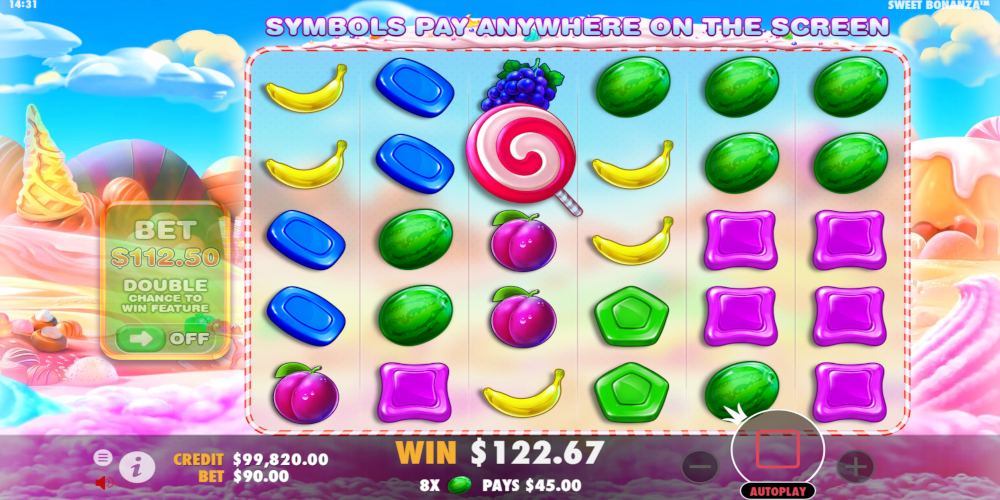
- Spin-to-Result Latency: Recorded 1.2 seconds, guaranteeing a fast-paced gaming rhythm that matches player anticipation without frustrating pauses.
- Animation Frame Rate: A stable 60 FPS on capable hardware, providing seamless visual feedback for every symbol drop, cascade, and win celebration.
- Feature Execution: Cascades and meter fills integrated smoothly into the core reel spin cycle, with no computational overhead causing jarring transitions.
- Autoplay Stability: Sustained high-speed autoplay sessions showed no performance degradation or input lag, even over hundreds of consecutive spins.
- Memory Management: Extended play sessions showed no memory leak issues, with RAM usage remaining stable, avoiding gradual slowdowns.
Mobile vs. Desktop: A Cross-Platform Comparison
A significant portion of UK players engage on mobile, making cross-platform parity essential. Our comparison indicated that Brick House Bonanza Slot delivers a notably consistent experience. The HTML5 framework guarantees the game logic and RNG are identical. Visually, mobile versions use slightly lower-resolution texture sets to conserve memory and bandwidth, but this is scarcely noticeable on smaller screens and leads to the outstanding performance. The touch controls for spin initiation and bet adjustment were very responsive, with no touch-delay issues. On mid-range Android and iOS devices, we noted the same 60 FPS performance as desktop during standard play, though some older smartphone models peaked at a still-smooth 30 FPS during the most intricate bonus animations. Battery consumption was also measured; a 30-minute continuous play session resulted in an average battery drain of 8-12%, which is normal for a graphically rich HTML5 game and indicates efficient power management. We also tested the user interface adaptation; the game’s control panel dynamically reflows for portrait and landscape modes, making sure critical buttons like spin and bet max are always within comfortable thumb reach, a detail that significantly enhances the mobile user experience compared to a simple scaled-down desktop version.
Network Stability and Offline Mode Features
Internet dependability in the UK can fluctuate, especially for mobile players. Our evaluations on poor connections revealed that Brick House Bonanza handles short disconnections smoothly. The game condition is often updated with the game server. If a connection fails mid-spin, the game will try to restore and complete the spin once back online, showing the result smoothly. Crucially, it does not allow a new spin to be initiated while connection is lost, shielding the player from potential bet loss or conflict. However, like all online slots for real money, it does not provide true play without internet for clear security and fairness reasons. The game needs a stable connection to the game server to transmit spin outcomes and payment data. The client-side graphics and sounds are buffered, so re-establishing the connection after a drop is swift, usually resuming play within a few seconds without needing a full reload. We particularly examined the response during network switching—for example, moving from a home wireless network to cellular network—and witnessed a flawless switch with only a short interruption in data transfer, not a lost session, which is a tribute to its robust network code designed for current, changing UK internet connections.
Impact of Efficiency on Game play and RTP
It’s vital to clarify that the technical performance metrics we record do not directly affect the mathematical Return to Player (RTP) of 96.5%, which is governed by a certified Random Number Generator (RNG). However, performance secondarily impacts the player’s capacity to interact with the game as intended. A laggy interface can result in mis-clicks on bet sizing or annoyance during bonus rounds. More critically, in a feature-rich game like Brick House Bonanza where timing and visual cues are part of the appeal, smooth performance is key to the session. Our tests verify that the game runs its complex set of rules—collecting brick symbols, triggering the bonus round, calculating cascading wins—instantaneously and clearly. This ensures that the published RTP is a true indication of play over time, unimpeded by technical delays or errors that could theoretically affect the pace and outcome of play sessions. For illustration, if animations were slow, a player might incorrectly assess the completion of a cascade sequence, perhaps influencing their perception of win frequency, even though the underlying maths remains unchanged. The game’s performance preserves the integrity of the player’s experience with the mathematical model.
- RNG Integrity: The core random number generation is server-side and independent of client-side frame rate or load times, ensuring fairness and regulatory compliance.
- User Action Accuracy: High responsiveness provides bets are placed and features activated accurately as the player wants, eliminating interface-based errors.
- Session Pace: Consistent speed permits the planned game pace, implying volatility and hit frequency manifest as designed by the mathematicians over a given time period.
- Visual Feedback: Smooth animations are necessary to correctly follow the game’s mechanics, like tracking brick collection progress towards the profitable bonus round trigger.
- Psychological Experience: A smooth, consistent performance decreases cognitive load and annoyance, enabling players to center on strategy and enjoyment, which is a key part of perceived value.
Ultimate Decision: Is Brick House Bonanza Designed for UK Players?
Based on our extensive suite of performance benchmarks and speed tests, we can definitively state that Brick House Bonanza Slot is remarkably well-optimised for the UK market. The developers have undeniably prioritised a fluid, responsive user experience across the variety of devices and network conditions typically found here. The sub-three-second load times on good connections and the rock-solid in-game performance, especially the critical spin responsiveness, meet and often exceed industry standards. While performance on very old mobile hardware or extremely poor networks will naturally suffer, the game manages even these edge cases with commendable grace. For UK players seeking a slot that combines compelling mechanics with a technically polished execution, Brick House Bonanza stands as a persuasive choice. Its performance profile ensures that the focus remains squarely on the strategic decisions and entertainment value, free from the distractions of lag or instability, providing a trustworthy and enjoyable gaming session every time you hit spin.
Our final analysis underscores that this title is built on a sturdy technical foundation. The seamless integration of its cascading reels and collection features hinges on this performance; a stutter would break the immersion. We observed no memory leaks during extended play on any platform, and the game’s resource management appears effective. For players concerned about data usage, the initial load is the most data-intensive, with subsequent sessions being far lighter due to caching. In the competitive landscape of UK online slots, where player expectations for quality are high, Brick House Bonanza’s engineering is a substantial asset. It demonstrates that behind its charming theme lies a truly capable piece of software, engineered to deliver a consistently smooth and fair gaming experience that accurately reflects its theoretical potential, making it a trustworthy option for performance-conscious players. Ultimately, this level of optimisation translates directly to player confidence; you can trust that the game will perform as advertised, allowing you to concentrate on the fun of the chase for those valuable brick collections and bonus rounds without a second thought about the technology powering it all.